Bathroom Reset Checklist: A 35-Minute Routine for a Busy Home
Table of Contents
In short
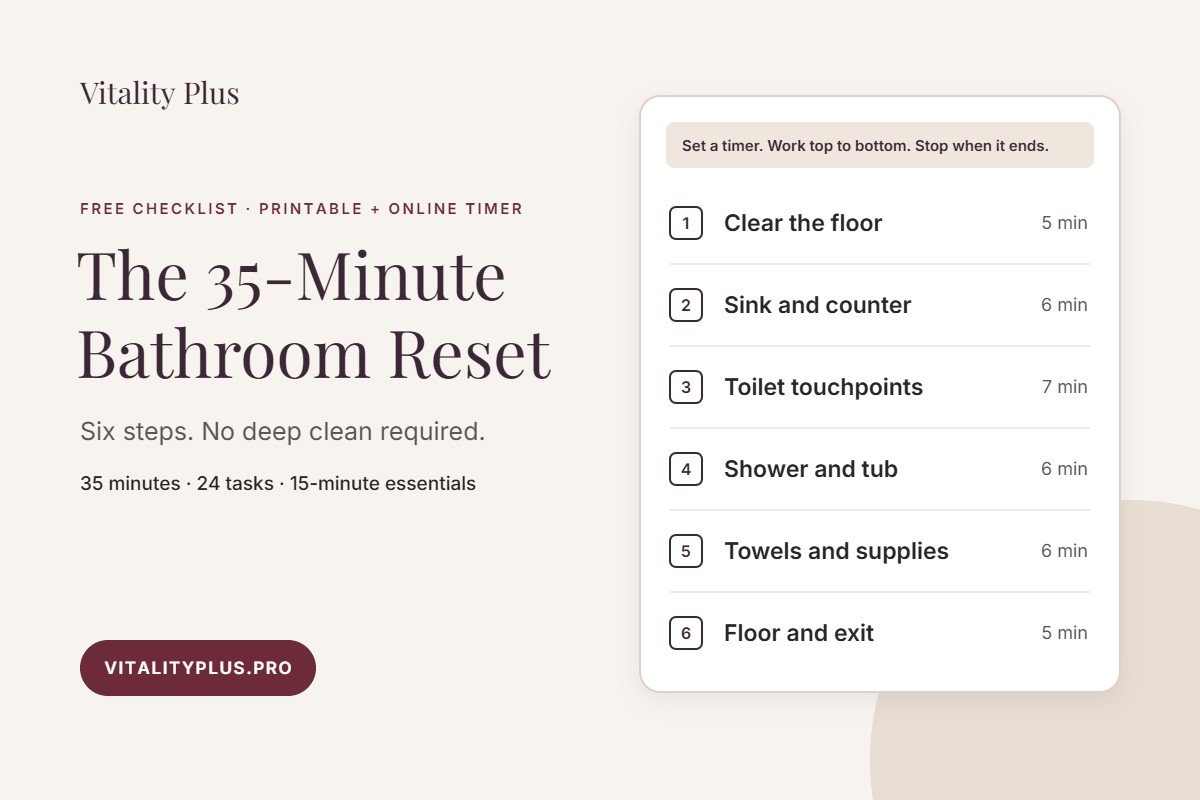
A bathroom reset checklist gives you one short, repeatable order: clear the floor, refresh the sink and counter, wipe the toilet touchpoints, tidy the shower, restock towels and paper, and finish at the door. The full routine takes about 35 minutes. Short on time? Do the six starred essentials in about 15 minutes, then stop when the timer ends.
Want to work from a checklist? Open the online Bathroom Reset with a built-in timer, or print the one-page sheet (US Letter · A4).
Why does the bathroom feel messy so fast?
The bathroom is usually the smallest room in the house, and it carries one of the heaviest daily loads. Several people use it, often in a hurry, and almost everything they touch gets left out: a toothbrush on the counter, a towel on the floor, an empty roll on the holder, three bottles on the edge of the tub.
Moisture makes it feel worse. Damp towels, splashes around the sink and a wet bath mat make the room look less clean than it actually is, even when nothing is dirty in a serious way. And because supplies run out quietly, the room can go from fine to frustrating in one morning when someone discovers there is no paper left.
None of this means the bathroom needs a deep clean every week. Most of the time it needs a reset: things back in their places, the surfaces people touch wiped, and the supplies refilled before anyone runs out.
Before you start: two simple rules
Reset, don’t deep clean
This routine is not the moment to scrub grout, descale the showerhead or reorganize the cabinet under the sink. Those jobs are real, but they belong on a separate day. A reset is about making the room easy to use again. If you notice a bigger job, write it in the notes field and keep moving.
Keep one basket by the door
Bathrooms collect items from other rooms: a hair tie from the bedroom, a cup from the kitchen, a toy from the living room. Put a small basket or bag by the door before you begin. Anything that doesn’t belong goes in, and you carry it out once at the end. This keeps you from walking in and out of the room every few minutes.
How long does a bathroom reset take?
The full reset takes about 35 minutes. The six starred essentials take about 15 minutes. Both versions follow the same order, so you can start with the essentials and keep going if you have more time.
| Step | Full reset | Essentials (★) |
|---|---|---|
| 1. Clear the floor | 5 min | 2 min |
| 2. Sink and counter | 6 min | 3 min |
| 3. Toilet touchpoints | 7 min | 3 min |
| 4. Shower and tub | 6 min | 3 min |
| 5. Towels and supplies | 6 min | 2 min |
| 6. Floor and exit | 5 min | 2 min |
| Total | 35 min | 15 min |
Set a timer before you start. When it ends, stop, even if a step is unfinished. Whatever is done is done, and the rest waits for the next reset.
The 35-minute bathroom reset checklist, step by step
Step 1: Clear the floor (5 minutes)
Start low. A clear floor makes the whole room feel calmer and gives you space to work.
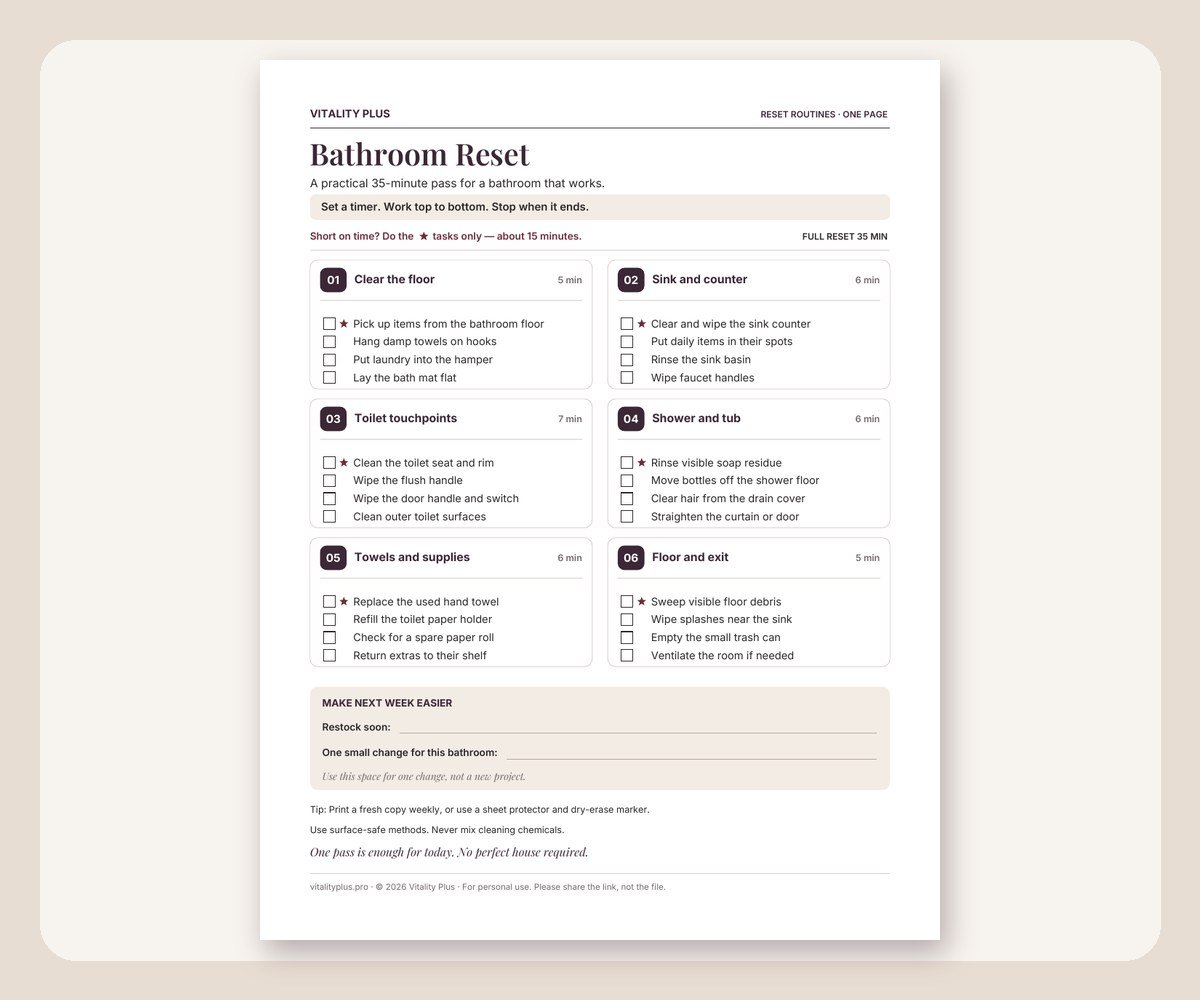
- ★ Pick up items from the bathroom floor.
- Hang damp towels on hooks.
- Put laundry into the hamper.
- Lay the bath mat flat.
Hang towels open rather than folded over a hook so they can dry. If a towel already smells musty, put it in the laundry instead. Anything from another room goes into the basket by the door.
Step 2: Sink and counter (6 minutes)
The sink area is where the room gets judged at a glance, so this step makes the biggest visible difference.
- ★ Clear and wipe the sink counter.
- Put daily items in their spots.
- Rinse the sink basin.
- Wipe faucet handles.
Lift everything off the counter, wipe the surface, then put back only what is used every day. Toothbrushes, soap and one or two daily products are usually enough. Everything else can go in a drawer or cabinet. A quick wipe with a damp cloth and a little soap is all most counters need between deeper cleans.
Step 3: Toilet touchpoints (7 minutes)
You don’t need to clean the whole toilet top to bottom every time. Focus on the places hands and skin actually touch.
- ★ Clean the toilet seat and rim.
- Wipe the flush handle.
- Wipe the door handle and switch.
- Clean outer toilet surfaces.
Work from cleaner areas to dirtier ones: handle and lid first, then seat, then rim, then the base. Use a separate cloth or disposable wipe for the toilet and keep it out of the sink area. The door handle and light switch are easy to forget, and they are touched more often than almost anything else in the room.
Step 4: Shower and tub (6 minutes)
This is a tidy-and-rinse step, not a scrub.
- ★ Rinse visible soap residue.
- Move bottles off the shower floor.
- Clear hair from the drain cover.
- Straighten the curtain or door.
Rinse the walls and tub with warm water to remove fresh soap marks. Move bottles to a shelf or caddy so the floor of the shower can dry. Recycle any empty bottles while you are there. Spread the curtain open, or leave the door slightly ajar, so air can move after the next shower.
Step 5: Towels and supplies (6 minutes)
This step prevents the small emergencies: no paper, no clean towel, no soap.
- ★ Replace the used hand towel.
- Refill the toilet paper holder.
- Check for a spare paper roll.
- Return extras to their shelf.
Keep at least one spare roll where someone can reach it without asking. If anything is running low, write it in the “Restock soon” field on the sheet or in the online tool, so it reaches the next shopping list instead of becoming a surprise next week.
Step 6: Floor and exit (5 minutes)
Finish where you started, and leave the room ready for the next person.
- ★ Sweep visible floor debris.
- Wipe splashes near the sink.
- Empty the small trash can.
- Ventilate the room if needed.
Sweep or wipe only what you can see. Empty the trash, replace the liner, and open the window or switch on the fan for a few minutes if the room feels damp. Then pick up the basket by the door and return those items to their rooms on your way out.
If you have only 15 minutes
Do only the six starred tasks, one from each step, in the same order:
- Pick up items from the bathroom floor.
- Clear and wipe the sink counter.
- Clean the toilet seat and rim.
- Rinse visible soap residue.
- Replace the used hand towel.
- Sweep visible floor debris.
That is enough to make the room usable and fresh for the next few days. In the online tool, switch to “Essentials” and the timer and progress bar adjust to the shorter route.
A calm note on cleaning products
You don’t need a cupboard full of special sprays for a weekly reset. Warm water, a little soap or an all-purpose cleaner, and a couple of cloths cover almost every step. The CDC explains that cleaning with soap and water removes most germs and dirt from surfaces, and that disinfecting at home is usually only needed when someone is sick or at higher risk.
- Read the label and use each product only on the surfaces it is meant for.
- Never mix cleaning products. Bleach mixed with ammonia or acids releases harmful gases.
- Keep the window open or the fan on while you clean.
- Store products out of reach of children.
Moisture matters too. The EPA notes that controlling moisture is the main way to prevent mold indoors, and recommends running bathroom exhaust fans and keeping indoor humidity roughly between 30 and 60 percent. Hanging towels open and ventilating at the end of the reset are small habits that help with exactly that.
Adjust it to your household
Small bathroom or no counter space
If there is barely room for a toothbrush, keep step 2 very short: one tray or cup for daily items, everything else behind a door. A narrow over-the-toilet shelf or a hook on the back of the door often does more than a new organizer would.
One bathroom for the whole family
A shared bathroom resets faster when each person has one spot: a hook, a cup, or a small basket with their name on it. During step 2, put things back into those spots rather than deciding where they should live every week.
Kids help
Give children the jobs with a clear finish line: picking up the floor, hanging towels, refilling the paper, or emptying the small trash can. Keep cleaning products and the toilet step with an adult.
A guest bathroom
If guests are coming, do the essentials, then add a fresh hand towel, a spare roll in plain sight, and an empty trash can. That is what guests notice. Nobody inspects the grout.
The room is very cluttered
If the bathroom is crowded with bottles and products, don’t try to sort them all today. Gather the extras into one box, finish the reset, and schedule a separate 15-minute session to decide what stays. The reset only needs a usable room.
How to keep it between resets
A few tiny habits stretch the result from one reset to the next:
- The one-minute evening check. Towels on hooks, counter cleared, lid down.
- The spare-roll rule. When you put out the last spare, it goes on the shopping list right away.
- Hooks before shelves. Damp towels dry better on hooks, and people actually use them.
- Same day each week. Pair the reset with something you already do, like Saturday laundry or the Sunday reset routine.
If the bathroom is part of a bigger weekly routine, the free Weekly Reset sheet keeps the rest of the house on the same rhythm. You can also browse all the free reset tools, including the Entryway Reset and Bedroom Reset.
Ready to start? Set the timer in the online Bathroom Reset, or download the printable sheet in US Letter or A4. One pass is enough for today.
Frequently asked questions
How often should I do a bathroom reset?
Once a week works for most households, with the 15-minute essentials in between when the room gets busy. A bathroom used by several people may need the essentials twice a week. There is no rule that you must finish all 24 tasks every time.
Is a bathroom reset the same as deep cleaning?
No. A reset makes the room usable and fresh again: floor clear, surfaces wiped, supplies refilled. Deep cleaning, such as scrubbing grout, descaling fixtures or washing the shower curtain, is a separate job you can schedule once in a while.
What is in the 15-minute bathroom reset?
Six starred tasks, one from each step: pick up the floor, clear and wipe the counter, clean the toilet seat and rim, rinse visible soap residue, replace the hand towel, and sweep visible debris.
What do I need before I start?
A timer, a cloth or two, a little soap or all-purpose cleaner, a separate cloth or wipe for the toilet, a small basket for items that belong elsewhere, and a fresh hand towel. You do not need special products or new organizers.
Do I need to disinfect the bathroom every week?
Usually not. According to the CDC, cleaning with soap and water removes most germs from surfaces, and disinfecting at home is mainly needed when someone is sick or at higher risk of getting sick. When you do disinfect, follow the product label.
Can I mix bathroom cleaners to make them stronger?
No. Never mix cleaning products. Bleach combined with ammonia or acidic cleaners can release harmful gases. Use one product at a time, ventilate the room and follow the label.
How do I keep towels from smelling musty?
Hang them open on hooks or a bar so air reaches both sides, run the fan or open a window after showers, and wash towels that already smell. Keeping indoor humidity moderate helps towels and the whole room dry faster.
What if several people share one bathroom?
Give each person one spot for daily items, such as a hook, a cup or a small basket. The reset then becomes putting things back rather than deciding where they belong. Children can handle the floor, towels and paper refills.
What should I do if the timer ends before I finish?
Stop. The reset is designed so the most important tasks come first in each step. Whatever is done is done, and the rest can wait for the next reset or a short essentials pass.
Is the online tool different from the printable?
No. Both have the same six steps and 24 tasks. The online version adds a timer, an essentials mode and tick boxes that are saved in your browser. The printable works well in a sheet protector with a dry-erase marker.
Sources
- Centers for Disease Control and Prevention (CDC), “Cleaning and Disinfecting Your Home,” cdc.gov.
- U.S. Environmental Protection Agency (EPA), “Ten Things You Should Know about Mold,” epa.gov.
Last updated: November 16, 2026