How to Reset Your Entryway in 35 Minutes Without Reorganizing Your Whole Home
In short
An entryway reset is not a complete reorganization. It is a short pass through the things that block the door or make the next departure harder: shoes, coats, bags, keys, mail, and the landing surface. Start by clearing a path, then work through those categories in order. Finish by setting up what you need for tomorrow. Set a 35-minute timer and stop when it ends. If you have only 15 minutes, do one essential task in each of the six sections.
Use this guide as you go: Open the paper-free Entryway Reset timer and checklist. It follows the same six steps.
Why does entryway clutter come back so quickly?
The entryway does several jobs at once. It is where people arrive, take things off, bring items in, and leave again. A pair of shoes may be there because someone plans to wear it tomorrow. A school notice may be there because someone needs to sign it. A bag may be there because it has nowhere easier to go. The pile is not always a sign that you need more storage. Often, several unfinished decisions are meeting in the same few feet of floor.
Trying to resolve every one of those decisions in a single cleaning session can turn a simple reset into a much larger job. You begin with shoes, notice an overflowing closet, walk to the bedroom with a coat, then start sorting clothes. An hour later, the entryway still looks the same.
The alternative is to give your reset boundaries. Work in a fixed sequence. Do the visible, useful jobs first. Put larger decisions aside for another time. When the timer ends, leave the remaining work for the next reset.
Start with the doorway, not the storage closet
The doorway is the highest-priority area because everyone needs to pass through it. Clear anything that makes opening the door, walking in, or putting bags down awkward. You can then address the categories around it. There is no need to empty a closet, buy baskets, or redesign the room before you can make it more usable.
Decide what “finished” means today
For this routine, finished means you can enter and leave without navigating piles, you can find the things used most often, and tomorrow’s essentials have a place to wait. It does not mean that every cabinet is labeled or every surface is empty.
Before you begin: choose the 35-minute or 15-minute route
You do not need a long supply list. Use what is already available: your usual storage spots, a place for items that belong elsewhere, and ordinary cleaning supplies for a quick surface pass. Keep a trash or recycling bin nearby if that helps. The important tool is the timer.
The full six-section routine adds up to 35 minutes: Make a path (5), Shoes (7), Coats and bags (7), Mail and keys (5), Quick surface pass (5), and Next exit setup (6). The shorter route uses the starred task in each section and adds up to about 15 minutes. The minutes are guideposts, not performance targets. A large family, muddy weather, or an especially busy week may make some tasks take longer. Stop when your chosen time runs out.
Choose the shorter route on days when the floor is the main problem, you have an appointment soon, or you simply want to make tomorrow easier without starting a bigger project. Choose the full route when you have time for a second pass through the everyday items.
The six-step Entryway Reset
Step 1: Make a path — 5 minutes
Essential, about 2 minutes: Move floor clutter away from the doorway.
Start where the door opens. Move anything that blocks the swing of the door or the usual walking path. Put stray items into one temporary return basket or container you already own. Then return those gathered items to their normal places, as time allows.
This is deliberately first. The open path gives you a useful result even if you stop early. Resist the temptation to sort every item in the basket. If something needs a longer decision, move it to a clearly chosen place for later instead of spreading it around the entryway.
In a very small apartment, your cleared area may be no more than the space needed to put on shoes and open the door. That counts. In a busy family house, focus on the route used every morning rather than trying to clear every corner.
Step 2: Shoes — 7 minutes
Essential, about 3 minutes: Pair and park the shoes used most.
Pair the shoes that are worn every day and put them where they can be found quickly. Return extra pairs to their usual storage. Set aside shoes that need cleaning rather than starting a lengthy wash. If shoes are often left outdoors or in the garage, check those areas only if they are part of your normal entry routine.
A useful rule is to leave the practical, current pairs closest to the door and keep occasional shoes elsewhere. The goal is not a visually perfect row. The goal is a simple place to stand and a reliable spot to find tomorrow’s pair.
If several people use the same door, give each person a small, recognizable shoe spot if there is space. If there is not, choose one shared boundary, such as one shelf or mat, and place overflow somewhere else.
Step 3: Coats and bags — 7 minutes
Essential, about 3 minutes: Hang current coats and everyday bags.
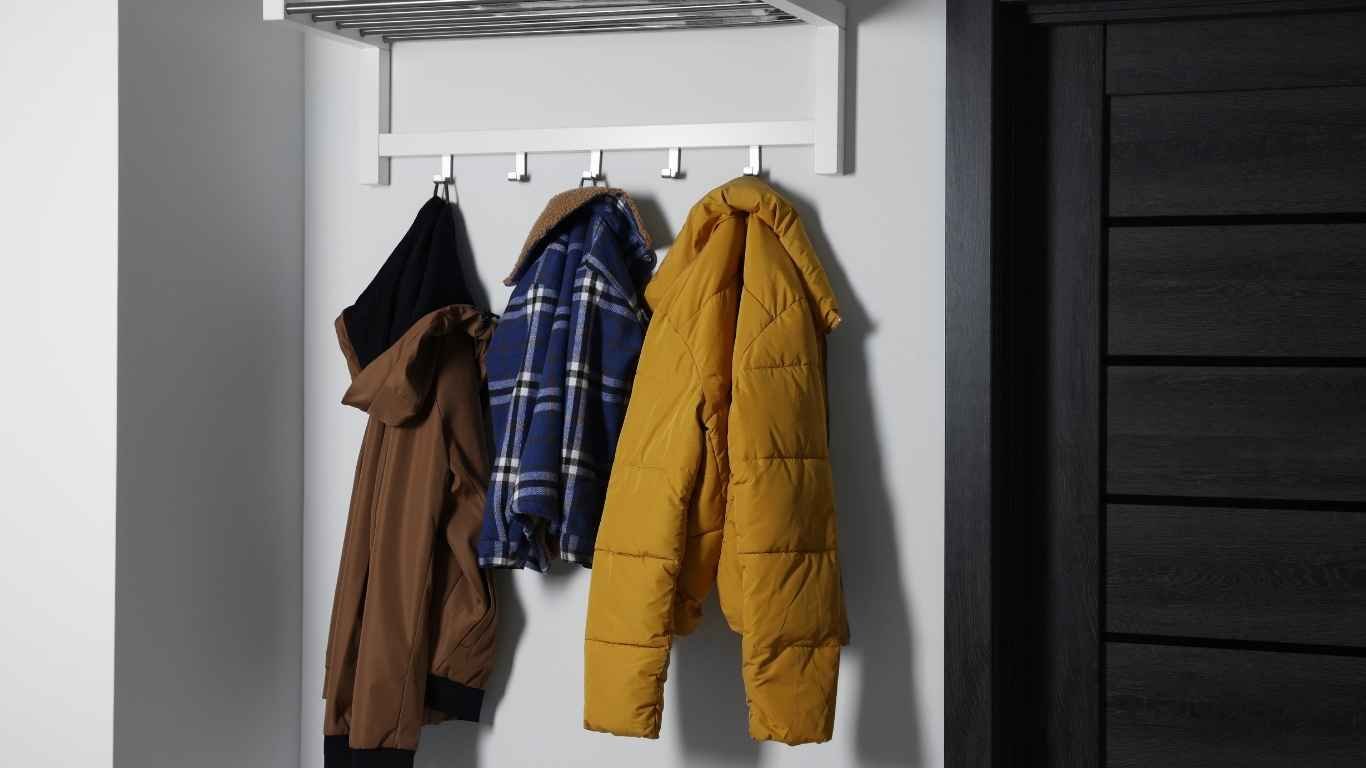
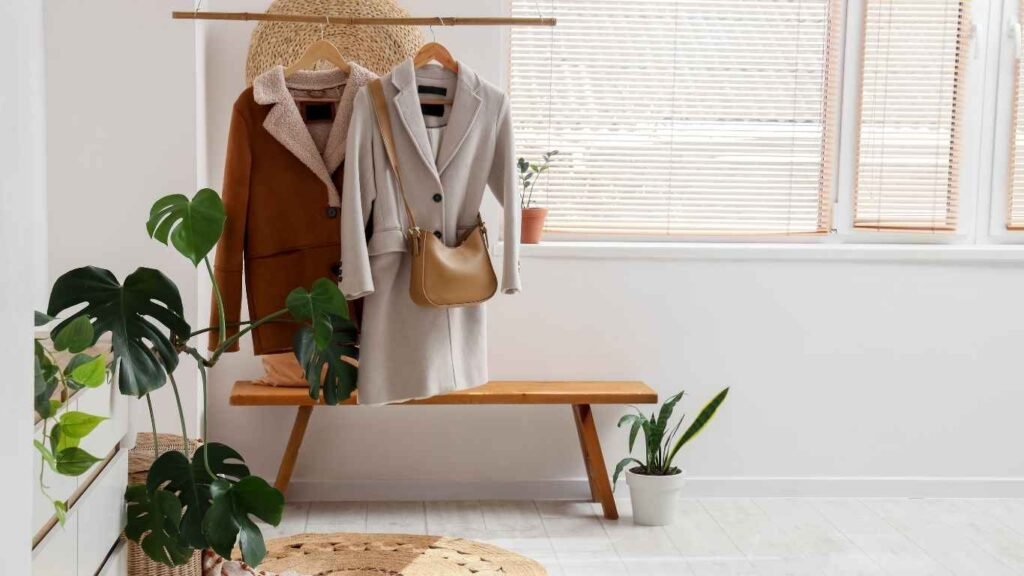
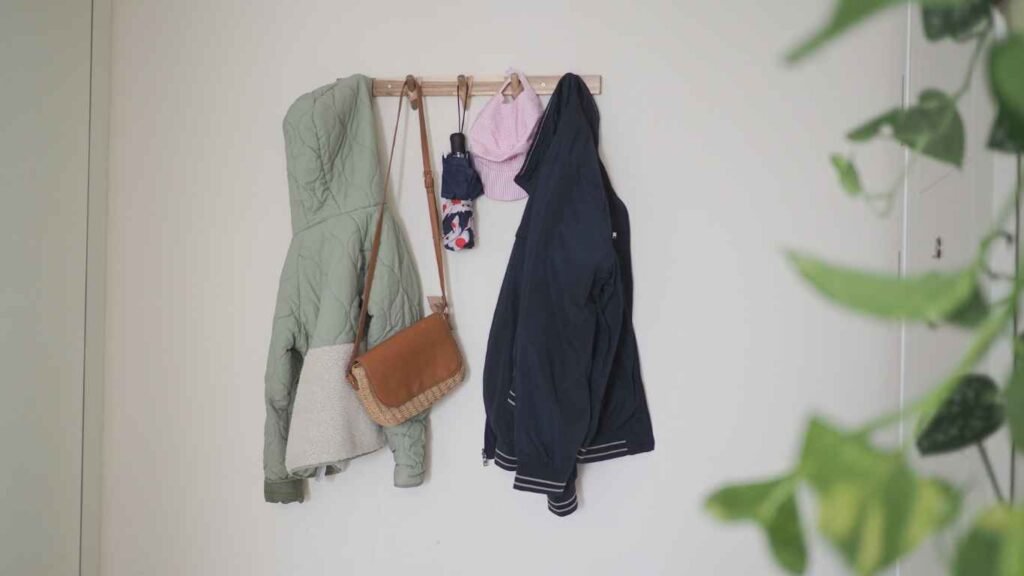
Put the coats and bags you actually use on the hooks, shelf, or pegs already in your home. Move off-season outerwear out of the immediate landing area. Empty loose trash from the everyday bags. Bring hats and gloves together in one usual spot if you need them this season.
A common obstacle here is treating the entryway as storage for every season. If winter coats, lightweight jackets, sports bags, backpacks, and guest items all compete for the same two hooks, even a large entryway will feel crowded. The reset asks only what needs to stay here now. You can make a longer-term storage decision on another day.
For children, keep the daily handoff uncomplicated. One place for the backpack and one place for the coat is easier to follow than a complicated sorting system. You do not have to add labels or buy organizers before trying this.
Step 4: Mail and keys — 5 minutes
Essential, about 2 minutes: Put action mail in one visible spot.
Mail tends to spread when unopened papers, things requiring action, and papers to keep all share the same surface. Collect anything that requires a response, signature, payment, or decision and place it in one clear spot. Recycle unwanted flyers and empty envelopes. Return keys to their usual home.
This is a collection step, not a paperwork session. Do not stop to open every account statement or start filling out forms. Those tasks need their own time block. The entryway only needs a workable rule for papers that arrive through the door.
If paper keeps piling up, choose a small weekly appointment to process the action stack. It can be part of your ordinary weekly planning session. The reset will then have a place to send important papers without adding another large job.
Step 5: Quick surface pass — 5 minutes
Essential, about 2 minutes: Wipe the entryway landing surface.
Once the everyday items are back in place, wipe the surface where bags, mail, and keys collect. Sweep loose dirt near the door and straighten the mat or shoe tray if you use one. Do not expand into washing walls, cleaning the entire hallway, or taking apart furniture. Those are separate cleaning jobs.
This section comes after clearing the clutter because wiping around piles rarely helps for long. The surface pass is short on purpose. If you have almost no time left, take care of the spot you touch most often and move on.
If the area has no table or bench, use the same step for a shelf, the floor immediately inside the door, or whichever landing spot you actually have. The exact furniture is not important.
Step 6: Next exit setup — 6 minutes
Essential, about 3 minutes: Set tomorrow’s bags by the door.
The final step moves your attention from what came home to what needs to leave. Check tomorrow’s first departure time. Place the shoes you expect to need together. Return one obvious forgotten item to its home, such as a cup or toy that has been sitting near the door.
There is no need to prepare the entire week. One next departure is enough. If your mornings vary, write down the time that matters for tomorrow rather than trying to build a schedule for everyone.
The matching printable has a small space for three useful decisions: when you need to leave, what should stay by the door, and what could be moved elsewhere. Keep the answers short. The simpler the setup, the easier it is to repeat.
If you have only 15 minutes, do this instead
Follow the same order but do just one essential action at each stop: clear the walking path (2 minutes), pair the main shoes (3), hang the current coats and bags (3), collect action mail (2), wipe the landing surface (2), and put tomorrow’s bags by the door (3). That makes 15 minutes in total.
You do not need to speed through the rest of the list. The starred route is a complete small reset in its own right. Stop when the timer ends. If you are interrupted before that, do not restart the whole process. Resume from the next unchecked essential when it suits you.
The online Entryway Reset tool lets you choose the full or essentials timer, check tasks as you go, and leave short notes.
How to keep the entryway usable between resets
Give daily items one obvious landing place
Think about what happens during an ordinary arrival. Where would you naturally drop your keys if nothing were in the way? Where do backpacks land when everyone comes in carrying groceries? Use those habits as clues instead of designing a storage system that requires everyone to walk across the house.
Choose the simplest possible place for shoes, keys, coats, and the small stack of papers awaiting action. The best spot is not necessarily the neatest-looking one; it is the one people can actually use while passing through.
Separate everyday items from occasional items
A daily backpack and a rarely used beach bag do not need equal access. Move occasional things away from the main landing zone. This is a useful short-term test before deciding whether you need any extra shelving or hooks.
If something has no home, do not let that decision halt the reset. Put it in one temporary location and decide on a permanent place during a separate organizing session.
Use a small end-of-day check, not another full cleaning session
Before bed or whenever your household slows down, look for the most disruptive item by the door. It may be a shoe in the walking path, a school bag on the floor, or an envelope that needs to travel tomorrow. Move that one thing. You can do a full Entryway Reset when you next choose to.
You are building a repeatable way to recover the space, not a rule that it must always remain empty.
Adjust the reset to your household
Small apartments: Keep the essential route. Use vertical hooks or existing shelves if available, but do not assume you need to buy anything. A clear path and a consistent shoe location may be the whole solution.
Families with children: Focus on the specific items that slow departures: coats, backpacks, shoes, and items that need to go to school. Invite household members to return their own things where appropriate; you do not need to complete everybody’s separate storage decisions during your timer.
Homes with pets: Keep the usual leash, walking gear, or towel in its regular spot if it belongs by the door. Do not add pet-related deep cleaning to this routine.
Shared or rental entrances: Work only within the area you can use. Avoid blocking shared routes, fire exits, or other people’s access. For the reset, the open walking path remains the first priority.
No actual entryway: Use the same routine at the door your household uses most, even if it opens directly into a kitchen or living room. The routine follows the function of the space, not the floor plan.
Your next reset starts with one small decision
Pick a time that matches your week. Some readers will use Sunday evening, some will reset on a weekday after work, and others will return to the sheet whenever the door area becomes hard to use. Put the checklist somewhere easy to find, or save the online version in your browser.
The promise is limited and useful: one pass, a timer, and a clearer departure point. You can always do a larger organizing project another day. You do not need one in order to start here.
Open the interactive checklist and timer: Entryway Reset online
Frequently asked questions
1. How long should an entryway reset take?
This printable uses a 35-minute full route, with section estimates of 5, 7, 7, 5, 5, and 6 minutes. The shorter essentials route takes about 15 minutes. Both are choices rather than requirements. Set the timer for the time you actually have and stop when it ends.
2. What if I have no entryway or mudroom?
Use the door you rely on most. The same steps work in a small hallway or at the edge of the kitchen: clear a path, sort the everyday shoes and bags, collect mail, wipe the landing spot, and prepare for the next exit.
3. What should stay near the front door?
Keep the items used regularly when leaving or arriving: current shoes, everyday bags, keys, and any necessary outerwear. If too many items compete for limited space, move occasional or seasonal things somewhere less convenient.
4. How do I stop shoes from piling up?
Pair the everyday shoes and give them a predictable location. Return extra shoes to existing storage. The quick reset works best when the near-door area is reserved for pairs people actually use.
5. What should I do with mail on the entryway table?
Separate papers that require action from recyclable mail. Put the action papers in one visible spot, then process them during a scheduled paperwork block. Do not turn a five-minute mail reset into an afternoon of filing.
6. Do I need new baskets, hooks, or organizers?
No. Start with the storage you already have. If a particular item consistently has nowhere practical to go, observe the pattern for a week or two before deciding whether a new storage solution would help.
7. How can children help without making it complicated?
Choose one short job that matches their ability, such as putting shoes in the usual spot or hanging their own coat. Clear destinations are easier to use than instructions to “clean the hallway.”
8. Can I use this reset every day?
You can use the full routine whenever it is useful, but daily completion is not the goal. On many days, one small action such as moving a bag or pairing shoes is enough to keep the path usable.
9. What if the timer ends before I finish?
Stop. Mark what you completed and leave the rest for another session. The approach is designed to make a partial reset useful, not to turn a checklist into another obligation.
10. Is the interactive version different from the printable?
The six steps, 21 tasks, and essential selections match. The printable is convenient for paper use; the online tool adds a timer, clickable checkboxes, and optional notes. Choose the format that is easiest to use today.